
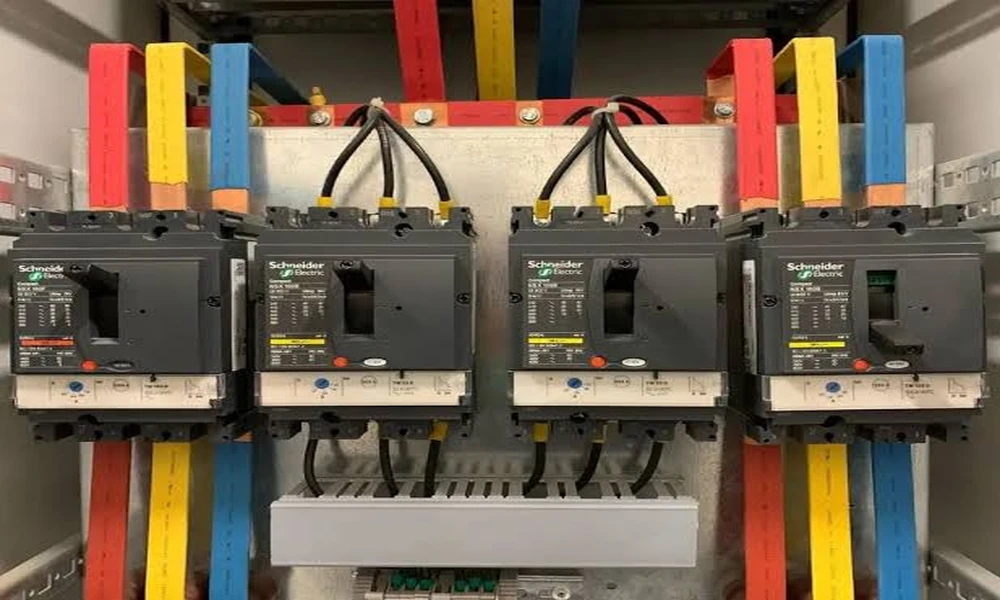
A circuit breaker without proper mounting hardware is a liability waiting to surface mid-installation. Get the chassis wrong once the panel’s already laid out, and a routine switchboard build turns into hours of re-drilling, re-routing, and re-checking clearances.
An mccb chassis is the mounting frame that holds a moulded case circuit breaker securely inside a distribution board or panel, nothing more glamorous than that, but everything downstream depends on it fitting properly. NAW Controls stocks Eureka single-sided and double-sided chassis engineered specifically to suit Susol MCCBs. Not a generic universal mount. A dedicated fit.
Why the mounting hardware matters as much as the breaker
Treating the chassis as an afterthought is the single most common mistake on a panel build, and it rarely surfaces until the assembly stage, well past the point where a five-minute decision would’ve fixed it.
A poorly matched chassis creates awkward wiring runs. It wastes panel space. Sometimes it just fails to hold the breaker as securely as the installation actually requires. None of that shows up on a spec sheet, but all of it shows up in the finished panel.
How big does the range actually go?
Configurations start at standard 3-pole designs. From there, options scale through 6 to 9-pole builds, and at the upper end, extend all the way to 72 poles for large-scale installations. A single double-breaker setup or a sprawling multi-pole configuration running the length of a plant room: there’s a chassis engineered for either.
These chassis also handle up to an 800A amp range, which places them squarely within 3-phase systems carrying genuine industrial load. Not the light residential circuits most generic hardware is built around.
Where these chassis actually get used
Susol mccb chassis from NAW Controls show up in high-power machinery installations, electrical panels, and distribution boards. Anywhere a moulded case circuit breaker needs a secure, standards-appropriate mount, basically. Industrial sites pushing heavy 3-phase demand and residential jobs with far more modest requirements both sit comfortably inside the range’s coverage.
Because the chassis is engineered specifically around the Susol breaker family – rather than adapted from a generic mount, it sidesteps the compatibility guesswork that comes with retrofitting hardware built for an entirely different breaker series. Worth confirming that pairing before ordering. A mismatch between chassis and breaker series isn’t always obvious until both parts are sitting on the bench.
A few practical checks before ordering
Lead time is worth confirming early. Several configurations across the range sit on an enquiry basis rather than off-the-shelf stock, the larger pole counts especially, given how much less common a 36-pole or 72-pole build is compared to a standard 3-pole chassis. Ordering ahead of the panel build date avoids a bottleneck right at the point where everything else is ready to go.
Cable zone clearance deserves a second look too. Higher pole-count chassis, particularly anything built for the 800A range, demand more physical space behind the mounting point than a smaller 3-pole unit ever would. Measuring the actual panel depth against the chassis footprint, not just trusting that “it’ll probably fit”, saves a return trip to the supplier once the board’s half-assembled.
And one more thing worth checking: single-sided versus double-sided isn’t purely a space decision. Double-sided chassis suit panels where technicians need access from both faces during servicing, which comes up more often on larger commercial boards than the spec sheets suggest. Single-sided remains the simpler, cheaper option for straightforward wall-mounted setups where access only ever comes from one direction.
None of these checks take long. Skipping them, on the other hand, tends to cost considerably more time than the five minutes they would have taken upfront.