
Insurance careers extend beyond the policy. Its about solving the problem of people losing their homes, businesses, health, and financial dependence. Before you can actually advise a client or sell an insurance product, however, you’ll need to meet your own state’s (or other licensing authority) requirements for the insurance agent license.
While every locality has its own procedure, the goal is the same: to ensure all licensed insurance agents have the skill and moral fiber necessary to handle customers in good faith.
Why Licensing is Required?
Insurance is comprised of certain investment decisions. Agents provide explanations of coverage, answer questions, and make suitable recommendations − something clients can’t do on their own. Licensing also assists in ascertaining that agents understand their products and the guidelines they need to operate within.
It is not just enough to pass the exam to comply with insurance agent license requirements. It promotes professionalism, as it shows your willingness to follow legal and ethical guidelines.
The Typical Licensing Journey
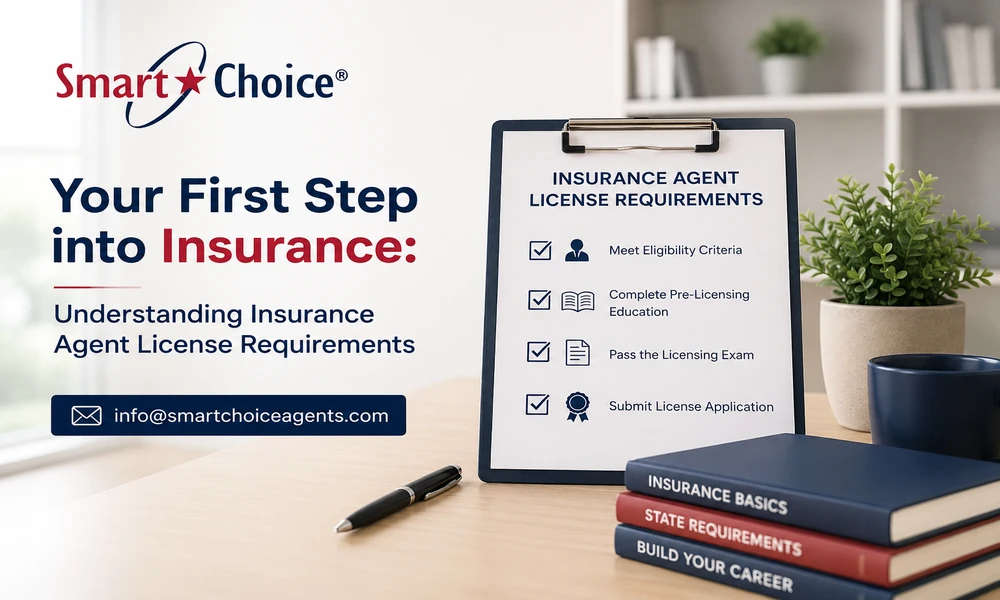
There is a simple set of steps that the majority of aspiring insurance agents would take prior to earning their license.
These mainly consist of:
- Verifying that: you are of the minimum age and are a resident
- Completing any required pre-licensing education
- Passing the state licensing examination
- Submitting an application
- Performing any required background check
- Paying the applicable licensing fees
While some states have additional unique requirements, depending on what type of insurance you are trying to sell.
Preparing for the Licensing Exam
The test evaluates your understanding of principles and types of insurance, kinds of policies, legislation, and ethical obligations. Success normally comes from being prepared well ahead of time, not cramming at the last moment.
A lot of candidates feel that they can groom their confidence through:
- Reviewing official study materials
- Taking practice exams
- Attending approved training courses
- Creating a regular study schedule
- By focusing on areas that need improvement
Knowing the insurance agent license requirements early help candidates to prepare better and prevent unnecessary delays.
Choosing the Right Insurance License
Every agent doesn’t sell the same policies. Some participate in personal lines, others commercial, or specialty markets.
Check which location aligns with your career interests before applying. Common license categories include:
Choosing the right license guarantees you have the justification necessary in your preferred field of expertise.
You End Learning After Licensing
Getting a license is only the starting point of an insurance career. Some licensing authorities mandate ongoing continuing education for agents so that there can be up to date know-how and compliance with evolving regulations.
It aids in keeping the agents updated with new products, legal changes, and best practices. Clients benefit from consistently working with experts who continue to improve their skills throughout their careers.
Building a Strong Foundation
Learning about the insurance agent license requirements provides you a comprehensive guide toward starting out in the profession. You train for the experience needed to answer the licensing exam, prepare yourself best for the test, as well as satisfy all requirements when making an application, and so you obtain success in long run. But more than that, licensing gives potential clients confidence that you know your stuff; they can trust you to give solid insurance advice. If you get off to a great start today, it will help you build a rewarding career based more on professionalism and credibility with customer relationships that last a lifetime.