
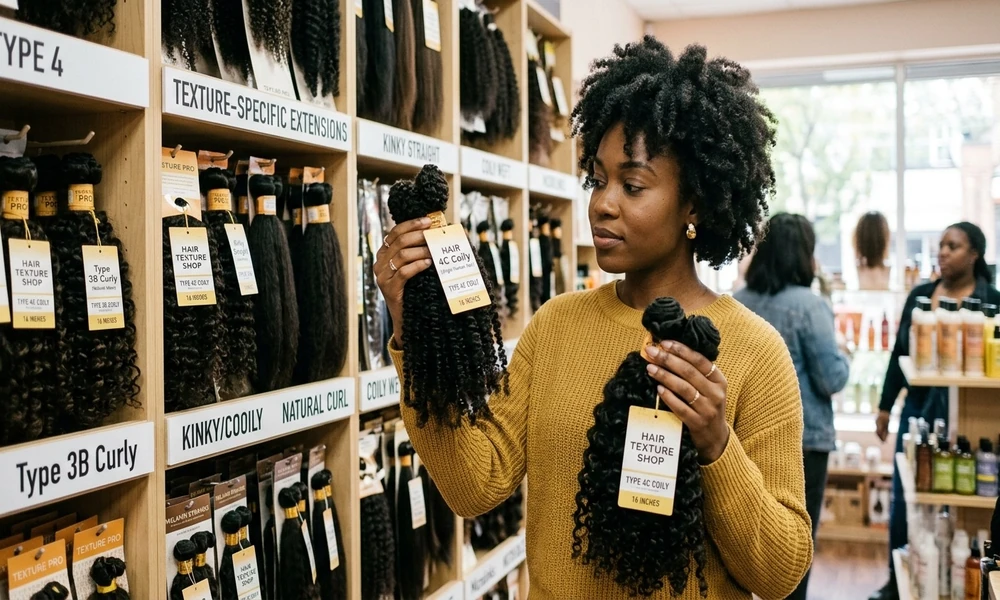
Hair extension shopping is becoming more personal, precise, and informed. Black women are increasingly moving beyond broad categories such as straight, curly, or wavy and looking for products that reflect the way their own hair behaves. Curl pattern, strand finish, density, volume, shrinkage, and blending requirements now influence purchasing decisions as much as length and color. For retailers, this shift creates an opportunity to build more useful shopping experiences. Businesses that clearly explain texture differences can help customers feel understood, reduce uncertainty, and make it easier for shoppers to select hair that supports their preferred styling routine. This level of detail also signals that the retailer understands textured hair rather than treating it as one general category.
Hair Texture Is Becoming a Retail Navigation System
Textured and natural hair can vary significantly from one person to another, even when shoppers use similar language to describe it. Someone searching forNatural Hair Extensions For Black Women may have a very different desired result from another customer using the same broad phrase. One shopper may want a silk-pressed appearance, another may prefer a blown-out finish, and someone else may need tightly defined curls. Successful retailers make these differences easy to recognize and navigate.
This is why texture is becoming more than a product feature. It is developing into a retail navigation system that guides customers toward relevant collections. Instead of asking shoppers to search through every bundle, wig, or clip-in option, a website can organize products by visual finish, curl family, density, and styling goal. That structure helps customers quickly understand which category is most likely to blend with their leave-out or recreate the look they want.
Shoppers Are Comparing Finish, Density, and Blend
Curl type remains important, but it is only one part of the decision. Two products may both be described as curly while producing noticeably different results. One may have soft, stretched spirals, while another may create compact curls with more shrinkage and volume. Clear close-up photography, videos showing movement, and descriptions of the hair in wet, dry, brushed, and styled states give shoppers a more realistic basis for comparison.
Textured and natural hair shoppers are also paying closer attention to straightened finishes. For example,Kinky Straight Hair Extensions may suit someone who wants the appearance of natural hair after blow-drying or light pressing, while silkier straight options may better match relaxed or flat-ironed strands. Explaining this distinction helps customers compare straightened-natural textures with curly and coily choices without assuming that every straight product blends the same way.
Density also shapes the final appearance. Some customers want lightweight fullness that blends easily with fine hair, while others prefer a denser, more dramatic result. Retailers can support better decisions by explaining:
- How much hair is typically needed for a full installation
- Whether the texture expands, shrinks, or becomes fuller after washing
- How the product blends with leave-out in its natural or styled state
- Which installation methods work best for the texture and density
Better Merchandising Reduces Costly Guesswork
Texture-specific shopping is not only helpful for customers; it also improves business performance. When a shopper understands what a product looks like, how it behaves, and who it is designed for, the purchase becomes less dependent on guesswork. That can reduce avoidable returns, repeated support questions, and disappointment caused by choosing a texture based only on a product name.
Strong merchandising should combine visual and educational information. Product pages can include side-by-side texture comparisons, model images from multiple angles, short styling demonstrations, maintenance expectations, and guidance on matching natural hair. Filters may also allow customers to browse by curl range, finish, density, installation type, length, or desired result. These tools turn a large catalog into a guided shopping experience rather than a confusing list of products.
Customer education should continue beyond the product page. Helpful blog posts, comparison guides, quizzes, and customer-service conversations can explain how humidity, heat styling, washing, and product application may affect the texture. The goal is not to promise that one option works for everyone. It is to give shoppers enough context to make a confident, realistic choice based on their own hair and routine.
Strategic Takeaways
The rise of texture-specific shopping reflects a larger change in the hair extension market. Customers expect brands to recognize that Black hair is diverse and that broad labels cannot fully describe every blending need. Retailers that organize their collections around real texture differences can create a more respectful, practical, and customer-centered experience.
For businesses, the strongest strategy is to make texture understandable before asking customers to buy. Clear categories, accurate visuals, thoughtful comparisons, and honest education can help shoppers identify the finish, fullness, and curl behavior that fit their goals. When customers can see themselves and their styling needs reflected in the shopping journey, trust grows-and that trust can lead to stronger satisfaction, repeat purchases, and long-term brand loyalty.